
Charlotte Region Approves Major Transit Investment
The Opportunity: Supporting a Region-Defining Transit Investment Amid a Challenging Public Climate
Mecklenburg County leaders were preparing to place a major transit and transportation funding measure on the ballot, one that would deliver the largest single source of new infrastructure funding in the Charlotte region’s history. The county includes a patchwork of towns and municipalities, each with its own priorities, demographics, and transportation needs. To give residents clear, factual information about the proposal, Charlotte Area Transit System (CATS) knew they needed a partner who could help them understand and predict public opinion at a granular level and communicate effectively across diverse communities.
AlphaVu began working with CATS more than a year before the referendum, laying essential groundwork: establishing baseline public sentiment, identifying the issues residents cared about most, and helping the agency understand how opinions differed between the metropolitan centers and the surrounding towns. This early work became critical in the months ahead.
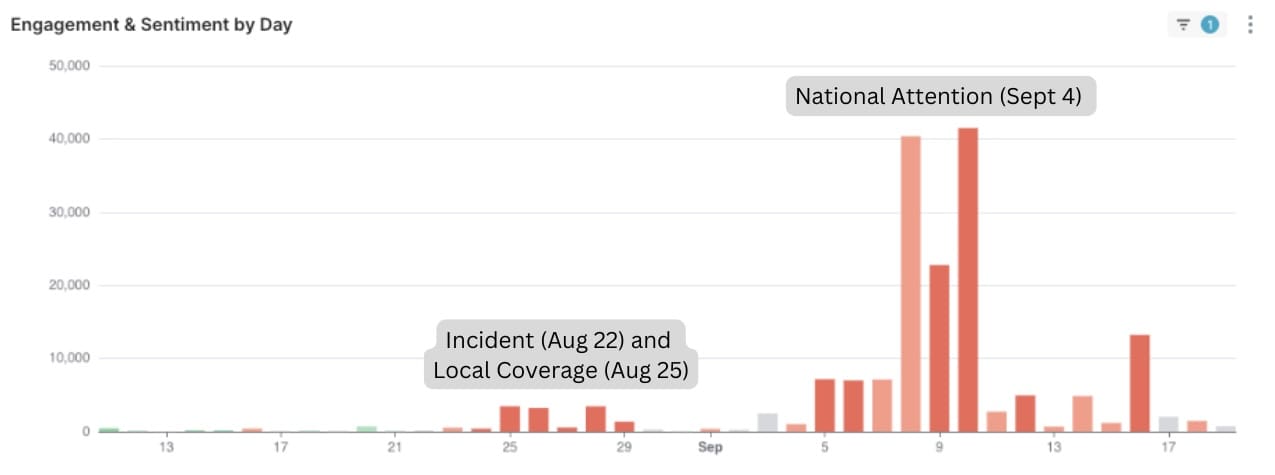
Engagement and sentiment for the weeks leading up to the incident
A Crisis That Shaped the Public Conversation
Two months before the vote, high-profile safety incident occurred on CATS’ Blue Line light rail. The incident quickly became national news, fueled by viral posts from several high-visibility political figures, including the president, and social media personalities. National voices (many with no connection to the Charlotte region) began dominating the online conversation, increasing confusion at a pivotal moment.
Transit agencies hope never to face a situation like this where negative stories become dominant headlines. But when it happens, they need clarity. CATS needed to understand:
- How much were non-local voices driving online conversation?
- How were community members engaging with the incident?
- What were local community members actually saying?
- How much of the online conversation was external noise?
- How might the incident shift public attention leading up to the vote?
- What questions or fears did residents have that required factual, transparent information?
AlphaVu provided continuous reporting during this period, distinguishing local voices from non-local political commentary, helping the agency stay grounded in what their own community was truly experiencing. Between formal reports, the DataVu platform delivered real-time updates every 15 minutes, giving the communications team a consistent pulse on a rapidly evolving conversation.
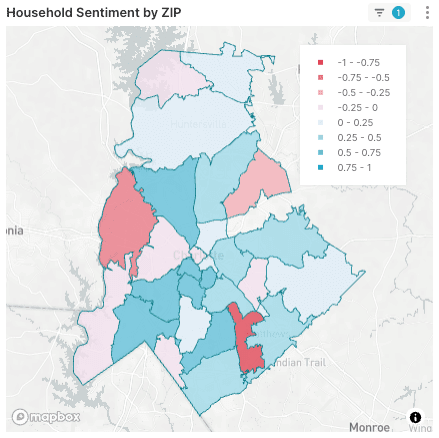
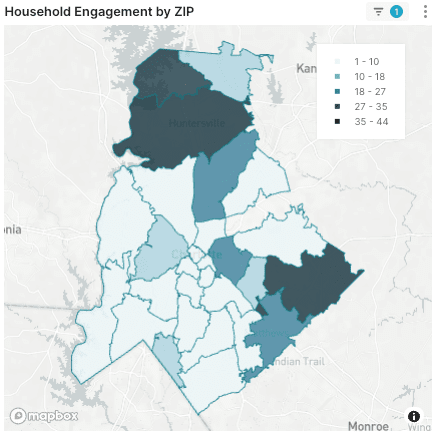
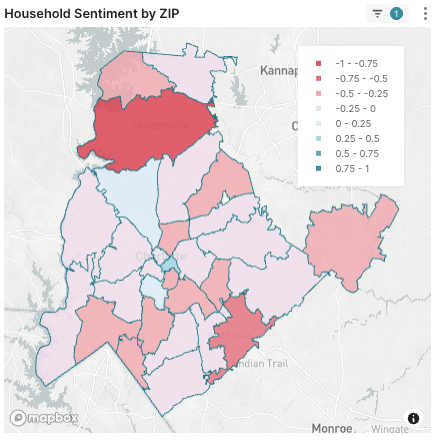
Shown from left to right are ZIP-level sentiment and engagement trends for the past 45 days, sentiment toward safety in the weeks before and after the incident, and city-level maps highlighting engagement patterns and overall sentiment.
Key Elements
To support voters with clear, factual information, CATS needed to navigate:
- A county-wide ballot measure spanning diverse towns and demographics
- Major differences in public opinion between the city center and surrounding suburbs
- A fast-growing conversation around safety following a high-profile incident
- A surge of non-local voices that risked distorting local sentiment
- Real-time visibility into which questions, concerns, and messages were resonating
- A clear understanding of how organic conversation and paid outreach were performing
These challenges required a system capable of separating local sentiment from outside noise and providing continuous insight in a highly dynamic environment.
Insights to Deliver the Right Message to the Right Community
Because each town within Mecklenburg County views transit differently, CATS used Ask Your Data (AYD) to identify the specific topics residents in each town cared about most, whether it was traffic relief, safety, accessibility, cost, or regional connectivity.
This allowed CATS to:
- Recommend tailored messaging for each community to ensure that the best information was getting to the right stakeholders.
- Understand the top themes among social comments so they could take the right action.
- Used detailed sentiment maps and social listening to determine what the community was saying and what they valued most.
- Answer real questions emerging from the conversation rather than national narratives.
- Stay aligned with fact-based messaging throughout the education effort.
During the safety incident, AlphaVu’s reporting helped CATS pinpoint which concerns were rising among local riders and which narratives were being driven by highly engaged but non-local accounts. This distinction mattered: it prevented overreactions to misleading national noise and ensured communications addressed the concerns of the people who would actually vote on the measure.
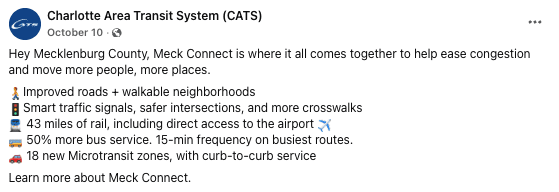
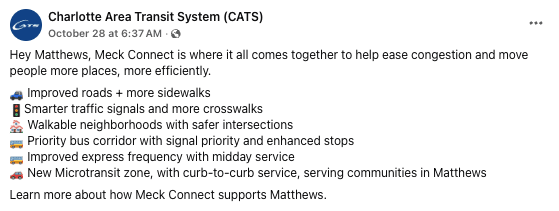
These two social ads illustrate how messaging was tailored for different communities, ensuring residents received the most relevant information for their area.
What AlphaVu Did
Throughout the year-long engagement, AlphaVu has supported CATS with:
- Baseline public opinion reporting across all municipalities.
- Geographically segmented sentiment tracking to understand regional differences.
- Daily and continuous crisis communication insights during the period around the safety incident.
- Analysis of organic engagement and paid ad performance, including sentiment on videos and informational outreach.
- Identification of frequent online “influencers” whose outsized activity could otherwise distort perceptions of public sentiment.
- Weekly working sessions to review data and help CATS’ communications team respond to emerging questions in real time.
This combination gave the agency a full, nuanced picture of community concerns and helped ensure residents had accurate, relevant information leading up to the vote.
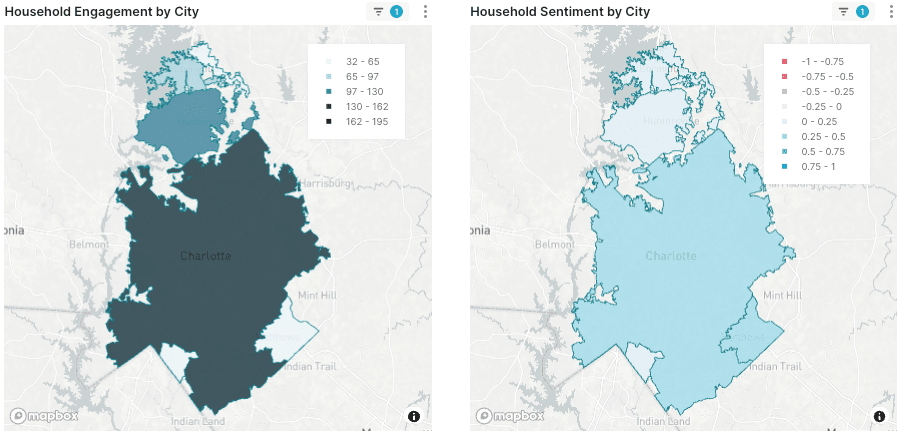
Sentiment map of Mecklenburg County to understand regional differences.
Measuring Success
As the election approached, local engagement around the ballot measure stabilized, even as national commentary remained noisy. CATS’ communications team could stay focused on what mattered: informing the people who would shape the region’s future.
The measure passed with 52% voter support.
But the partnership didn’t end there. With the ballot measure now approved, we’re proud to continue our partnership as CATS advances the next phase of planning and community engagement. The next phase focuses on ongoing community listening, transparency, and making sure residents stay informed as the planning process moves forward.
The Charlotte region’s experience shows what’s possible when agencies invest early in understanding public sentiment, communicate clearly during moments of uncertainty, and build long-term trust with their communities. Today, that same insight-driven approach continues to guide CATS as they move from ballot approval to long-term execution, ensuring the community remains informed, engaged, and heard.

Charlotte Region Approves Major Transit Investment
Ballot Measures, Transit Funding Measures

Detecting AI Hallucinations Is Harder—And More Important—Than Ever
Power of AI
AlphaVu Helps Transit Agencies Prepare for 2026 FIFA World Cup
Capital Projects, Measuring Data, Power of AI
Overcoming Opposition to Port Expansion Project
Capital Projects, Community Engagement, Fighting Misinformation
New AI Chat Agent Delivers Faster Insights for 2028 Olympics
Measuring Data, Power of AI
Exploring Bluesky?
Announcement, Targeted Messages

2025: The Year AI Transforms Customer Satisfaction Measurement
Measuring Data, Power of AI, Targeted Messages
Improving Awareness of Personal Security Tools
Community Engagement, Measuring Data, Targeted Messages
AlphaVu Deploys New AI-Powered Technology in DataVu™
Announcement, Measuring Data, Power of AI
AlphaVu Granted Patent for Innovation that Detects Sentiment and Misinformation
Announcement, Fighting Misinformation, Measuring Data, Power of AI
Now Supporting the San Diego Association of Governments
Announcement, Government Relations
Targeted Engagement for a Community in Crisis
Community Engagement, Crisis Communication, Targeted Messages
Engaging Disadvantaged Communities
Capital Projects, Community Engagement, Government Relations, Measuring Data
Harnessing Positive Pressure
Measuring Data
Public Meetings are Failing The Public
Community Engagement, Government Relations, Measuring Data
Austin Votes for Transit Expansion
Ballot Measures, Capital Projects, Targeted Messages
Phoenix Prevents Loss of Transit Funding
Fighting Misinformation, Targeted Messages